Sam Altman Says Personal RAM Is Inefficient, Suggests the Same Logic Applies to Toilets
OpenAI CEO Sam Altman has questioned the efficiency of personal computers, arguing that most people use their RAM at full capacity for only a small fraction of the day.
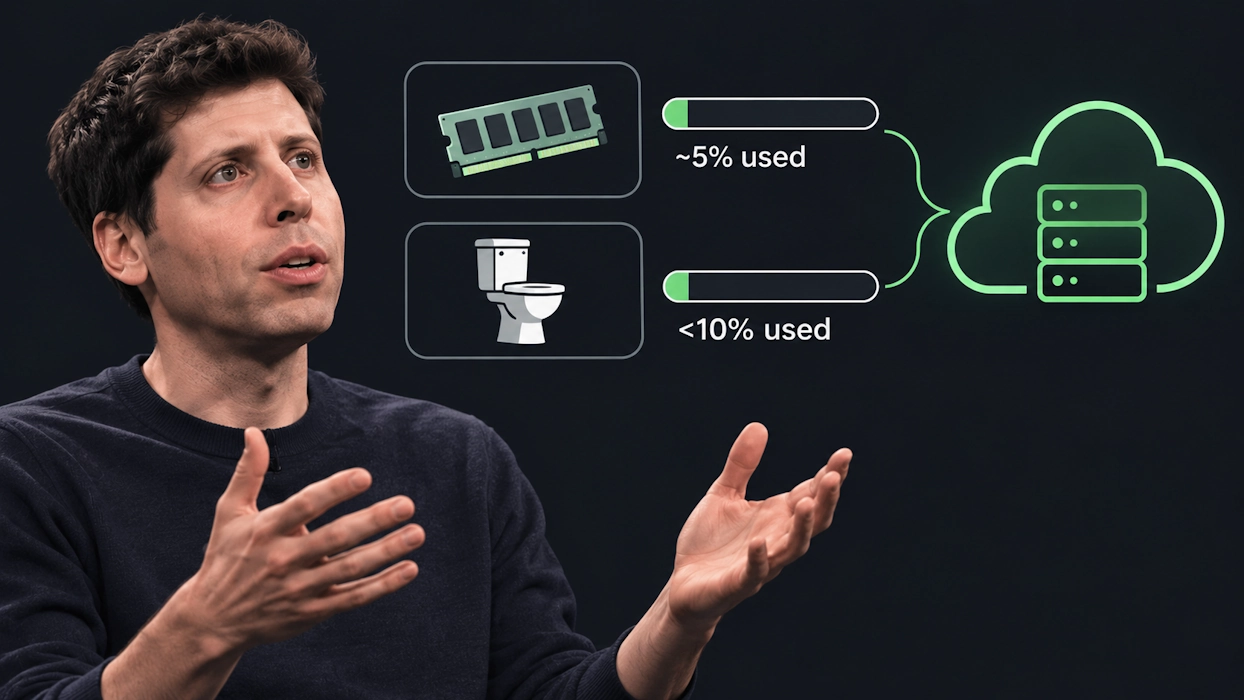
According to Altman, owning expensive hardware that sits idle 95% of the time makes little economic sense when shared cloud infrastructure offers an alternative.
He reportedly extended the same reasoning to another household necessity: toilets.
"People use their toilets for less than 10% of the day. Yet everyone insists on having their own. From a resource utilization perspective, this is extremely inefficient."
Altman suggested shared infrastructure would let people access resources only when needed, rather than paying to own them permanently.
When asked whether he personally planned to switch to shared toilets, Altman reportedly clarified that his situation was different.
"I need dedicated infrastructure for critical workloads."