tags / ASP.NET Core

Articles about ASP.NET Core

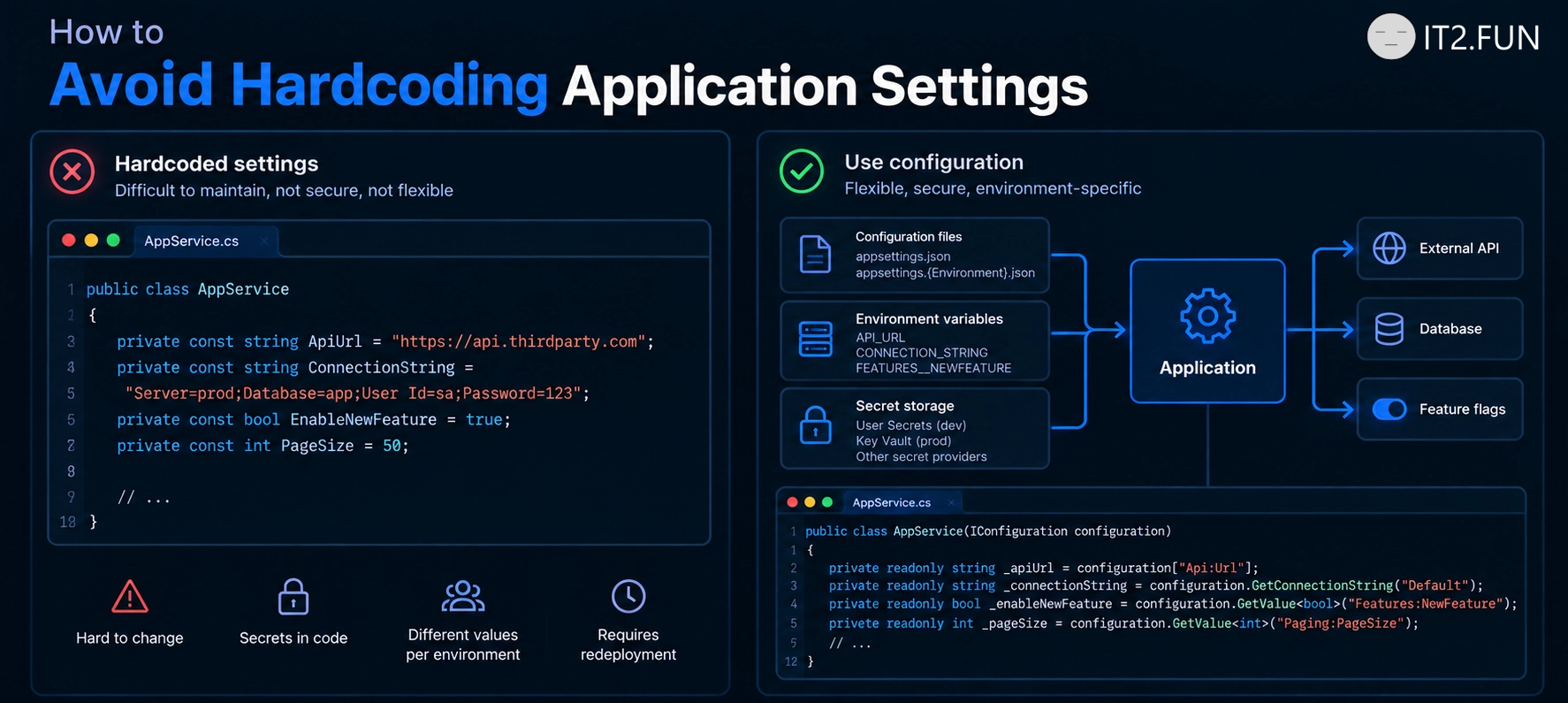
How to Read Configuration in ASP.NET Core

Need to access application settings?

Use IConfiguration

Common configuration sources:

  • appsettings.json
  • Environment variables
  • User Secrets
  • Azure Key Vault
  • Command-line arguments

ASP.NET Core automatically combines multiple configuration providers into a single configuration object.

How to Read Configuration in ASP.NET Core

How to Handle Errors in ASP.NET Core

Need to return a proper response when something goes wrong?

Use exception handling middleware.

How to Handle Errors in ASP.NET Core

Common approaches:

  • UseExceptionHandler()
  • Custom exception middleware
  • Return appropriate HTTP status codes
  • Log unexpected exceptions
  • Avoid exposing internal details

Centralized exception handling helps keep API responses consistent across your application.

How to Execute Code Before Every Request

Need to run logic for every incoming HTTP request?

Use ASP.NET Core middleware.

Common middleware scenarios:

  • Logging requests
  • Handling exceptions
  • Authentication
  • Authorization
  • Adding custom headers
  • Response compression

Middleware executes in the order you register it in the pipeline.

Each middleware can inspect the request, perform work, and pass execution to the next middleware.

How middleware works in .NET

How to Secure an ASP.NET Core Endpoint

Want to protect an API endpoint?

How to Secure an ASP.NET Core Endpoint

Add the [Authorize] attribute.

Common authorization options:

  • [Authorize]
  • [Authorize(Roles = "Admin")]
  • [Authorize(Policy = "EmployeeOnly")]
  • [AllowAnonymous] for public endpoints
  • Configure authentication before using authorization

Protected endpoints require authenticated users before your action executes.

Public endpoints without [Authorize] are accessible without authentication.

How do you organize authorization in your APIs?

How to Increase Throughput

Consider parallel execution.

Common approaches:

  • Use Task.WhenAll()
  • Process independent tasks concurrently
  • Increase consumer instances
  • Batch operations when possible
  • Remove unnecessary bottlenecks

Parallel processing allows multiple operations to run at the same time rather than waiting for each to finish.

For example:

  • 10 API calls executed sequentially may take 10 seconds
  • 10 API calls executed in parallel may take around 1 second

Of course, parallelism isn't free. Databases, external APIs, and infrastructure still have limits.

But if your workload is independent, parallel execution is often one of the simplest ways to increase throughput.

What was the biggest throughput improvement you've achieved?

How to Increase Throughput